
DVD-quality lessons (including tabs/sheet music) available for immediate viewing on any device.
Take your playing to the next level with the help of a local or online mandolin teacher.
Monthly newsletter includes free lessons, favorite member content, mandolin news and more.
Premier Sponsors


|
Please note this is an archived topic, so it is locked and unable to be replied to. You may, however, start a new topic and refer to this topic with a link: http://www.mandohangout.com/archive/35650
mmuussiiccaall - Posted - 11/22/2013: 12:59:18
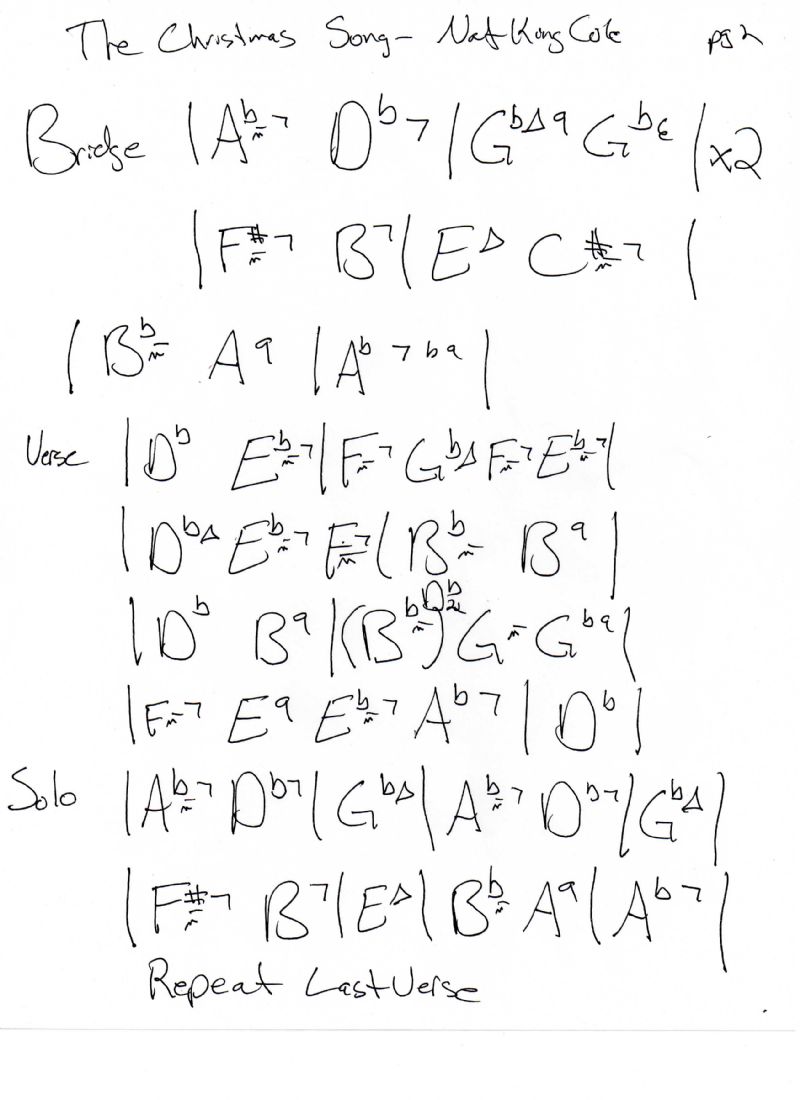
I've added one of my many original charts that I use with my students, this one shows all the names for major and minor chords in a random order. Just start somewhere on the circle and go around either direction. I jokingly call it the circle of pain, if these or any other type are a unknown to you then you're not ready for on the fly jamming. I have included an example song that would challenge most mando players.
Edited by - mmuussiiccaall on 01/17/2014 06:46:35
 Example | 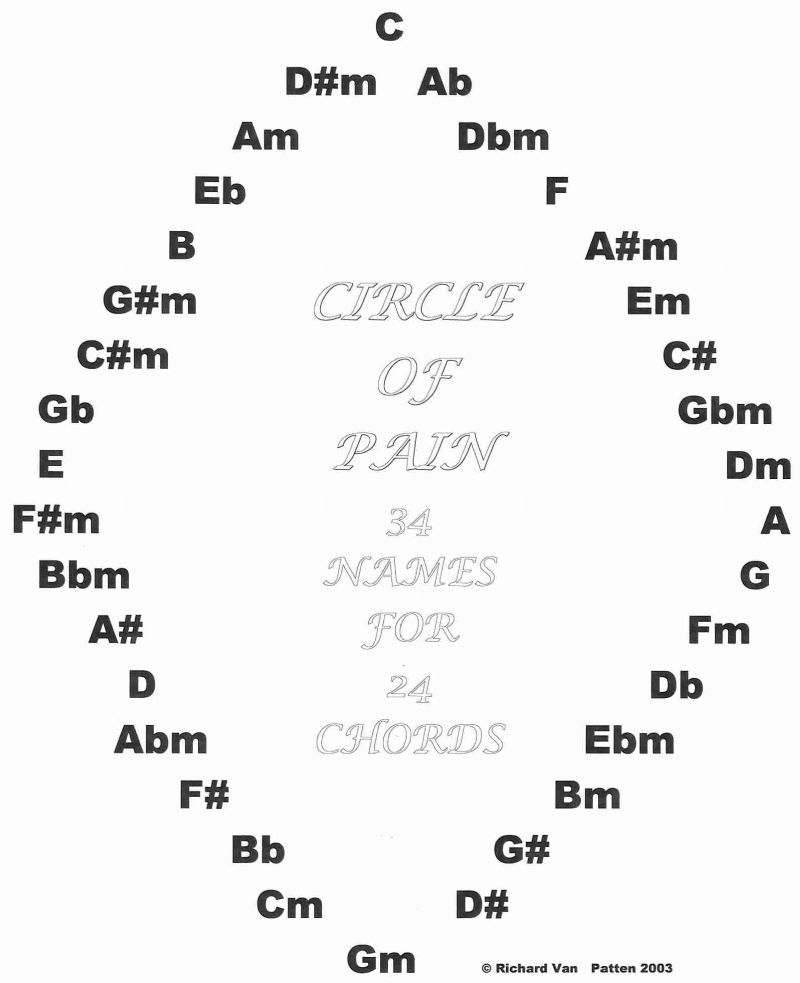 CHORD CIRCLE OF PAIN |
fiddlebutcher - Posted - 11/24/2013: 02:42:52
Very aptly named..!!
Why not just learn the seven diatonic chords that all belong together in the same key then.....
transpose them...???
e.g.........
IM7...IIm7...IIIm7....IVM7.....V7.....VIm7.....VIIm7b5
Seems to me this way is.....PAINLESS......???
At least you learn how the chords relate to each other....??
mmuussiiccaall - Posted - 11/24/2013: 06:29:32
Nice to hear from you Henry, this chart is to get students to be ready for playing live with no time to think about the positions of the chord in the scale. I agree that it is extremely important to know each chord's scale position in the key you are playing in in order to "hear the changes" of any song that comes along. play on!
fiddlebutcher - Posted - 11/24/2013: 12:36:28
Ah So......you are saying..... when playing live there is time to think about the chords in your random chart...???
I have played live for years and I follow songs ''on the fly''....
I am saying........ my head would explode if I had to think about your chart.....!!
Nah.....learn chords in context...learn the chords in ''the'' key......learn common chord progressions....
THEN......( transpose ) ( very important skill in musicianship )
So you are actually learning only SEVEN chords...which relate to each other...!!
mmuussiiccaall - Posted - 11/24/2013: 13:01:30
The chart is not meant to be memorized it's purpose is to let you know that you are ready to play any major or minor chord by name.
fiddlebutcher - Posted - 11/25/2013: 01:57:04
The ''Circle of Fifths'' can do it all...even 'random' chords.
Philphool - Posted - 11/27/2013: 14:51:34
Nice thought and attempt, but I don't see any value whatsoever in that chart.
(Except maybe to discourage folks you dislike from playing.)
mmuussiiccaall - Posted - 11/27/2013: 19:33:54
Sounds like you can't play 'em, hence the P A I N___________xxxx
mmuussiiccaall - Posted - 11/29/2013: 10:01:21
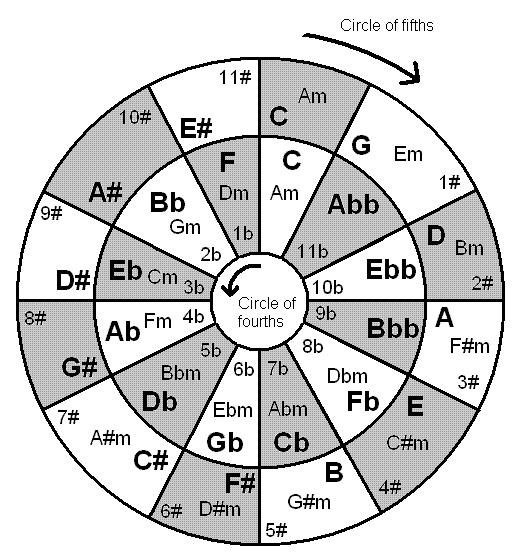
For the CIRCLE OF FIFTH'S huggers here's the advanced model with has lots of possible names. No matter what, it it not in a worst possible random order it is in a perfect order.
 Adv O |
fiddlebutcher - Posted - 11/29/2013: 16:30:14
Oh my......I have no words for this..???
Why do you make it seem so complicated..???
Keep it simple...!!
Then it is much easier to learn...
What is the point of the key of E sharp.....That's the key of FFFF ????
mmuussiiccaall - Posted - 12/01/2013: 01:50:33
That version of the circle is meant to explain the complicated.
Philphool - Posted - 12/14/2013: 14:23:10
quote:
Originally posted by mmuussiiccaall Sounds like you can't play 'em, hence the P A I N___________xxxx
Wrong! I can play all of them. It's just a weird way to display things.... random? Not helpful to me.
If it helps your students,..... great!
mmuussiiccaall - Posted - 01/10/2014: 16:46:58
If you can go around the circle very quickly you have proven to yourself that you really know them. When my students can do it they prove themselves to me!
|
ricomando - Posted - 01/12/2014: 13:41:35
What comes after the circle ? the tetrahedron of chord substitutions .
they should also learn the circle with at least 3 different inversions
mmuussiiccaall - Posted - 01/14/2014: 23:09:48
Rico inversions are great and also making them all dominant 7. That would be about enough for bluegrass and old-time. If they want more modern music I have them make the chords into M7. 9 sus, b5 whatever.
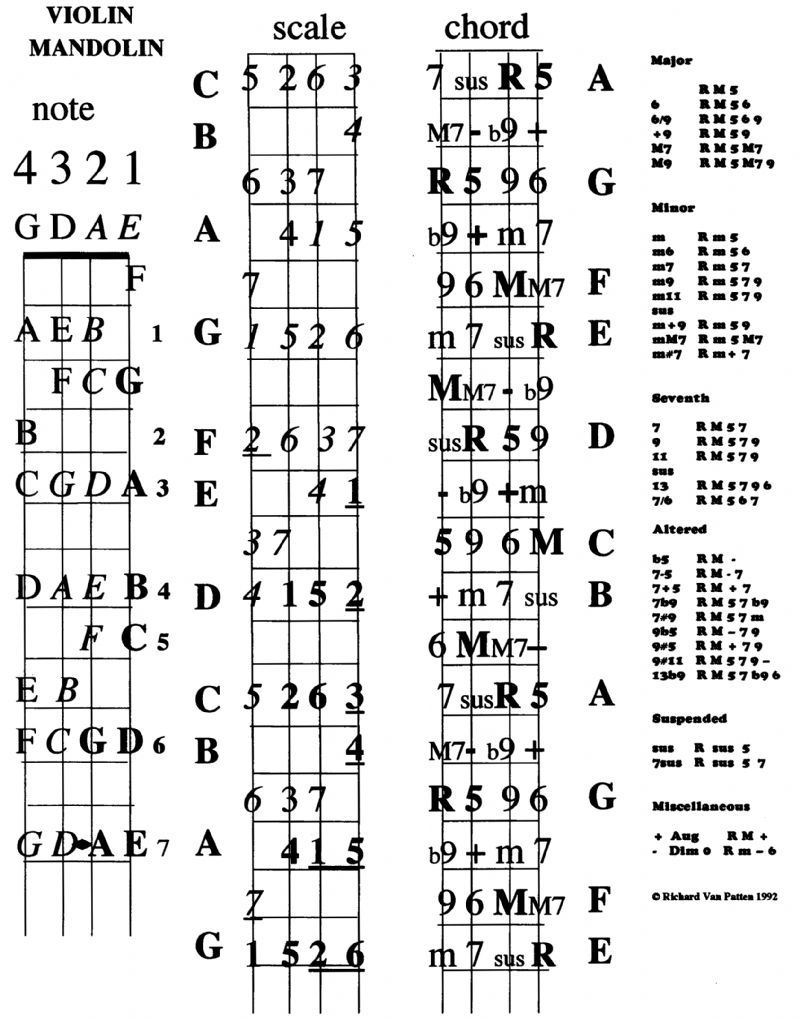
I've attached my sheet that shows how to play every chord that exists, it would take hours to explain so I don't know who on this site can figure it out but anyway here it is. regards Rick
 Master Sheet |
m - Posted - 01/16/2014: 13:27:08
Learning the theory behind it is a lot easier and far more useful.
mmuussiiccaall - Posted - 01/16/2014: 18:45:53
quote:
Originally posted by m
Learning the theory behind it is a lot easier and far more useful.
I would have already taught the student the theory and as I said in an earlier post making it around the circle proves they can apply the theory.
mandoteacher - Posted - 01/22/2014: 07:21:31
quote:
Originally posted by Henry George
The ''Circle of Fifths'' can do it all...even 'random' chords.
But only for the Major (Ionian mode) and relative minor (aeolian mode) scales. It doesn't touch the other 5 church modes (which are Ionian, Dorian, Phrygian, Lydian, Mixolydian, Aeolian, Locrian), the 4 Klezmer modes (Ahava Rabboh (or Freyghish), Mi Sheberach, Adonoy Moloch, Mogen Ovos), the 72 Makamat modes, or the 144 original Greek modes.
The scales/modes you learn depends of the styles/genres of music you wish to learn and play. For example, most bluegrass tunes written between 1850-1950 use the church modes Ionian (major) and Aeolian (relative minor). But jazz music composed in the same period uses all seven of the church modes; klezmer composed during that time uses the Ionian, Aeolian, plus the other 4 I mentioned above, also harmonic minor and melodic minor; and Sufi music may use any of the 72 Makam modes
It gets complicated!
mmuussiiccaall - Posted - 01/23/2014: 15:54:08
quote:
Originally posted by mandoteacher
quote:
Originally posted by Henry George
The ''Circle of Fifths'' can do it all...even 'random' chords.
But only for the Major (Ionian mode) and relative minor (aeolian mode) scales. It doesn't touch the other 5 church modes (which are Ionian, Dorian, Phrygian, Lydian, Mixolydian, Aeolian, Locrian), the 4 Klezmer modes (Ahava Rabboh (or Freyghish), Mi Sheberach, Adonoy Moloch, Mogen Ovos), the 72 Makamat modes, or the 144 original Greek modes.
The scales/modes you learn depends of the styles/genres of music you wish to learn and play. For example, most bluegrass tunes written between 1850-1950 use the church modes Ionian (major) and Aeolian (relative minor). But jazz music composed in the same period uses all seven of the church modes; klezmer composed during that time uses the Ionian, Aeolian, plus the other 4 I mentioned above, also harmonic minor and melodic minor; and Sufi music may use any of the 72 Makam modes
It gets complicated!
As long as you don't use those micro-tones the cof's is a great visual aid and has been since 1711. By the way I'd love to have an oud.
Terms of Use | Privacy Policy | Privacy Consent (EU/GDPR Only)
Copyright 2026 Mando Hangout. All Rights Reserved.


